How work moves, what happens by itself, and who has to agree.
Stages, workflows, rules and approvals are part of the same Business Graph as the data they act on — configured, versioned and enforced by one engine.
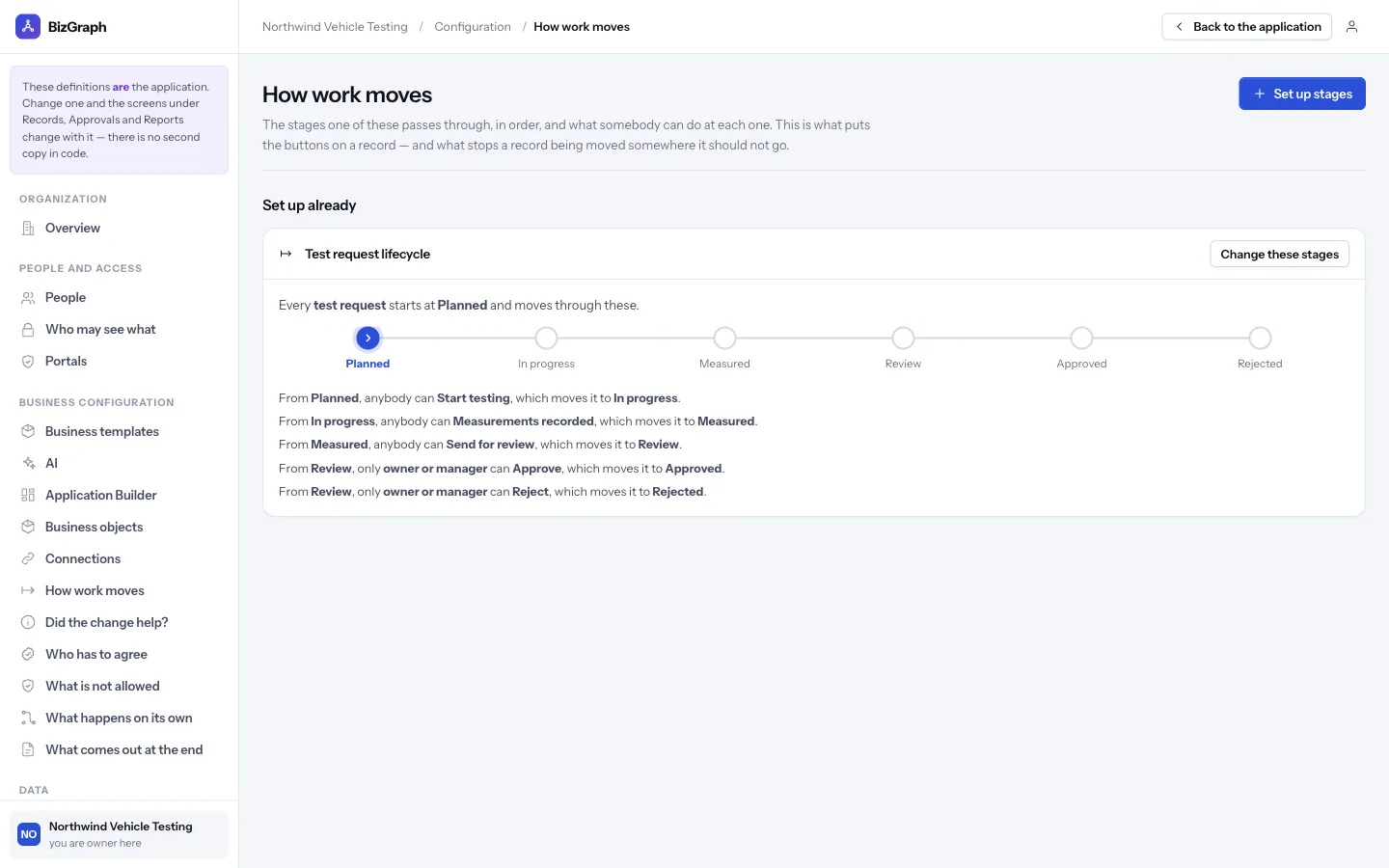
Every record moves through the stages you define.
A test request starts at Planned and moves to In progress, Measured, Review and Approved or Rejected — and each move names who may make it. The buttons on a record are generated from those moves, so a person only sees what they are allowed to do.
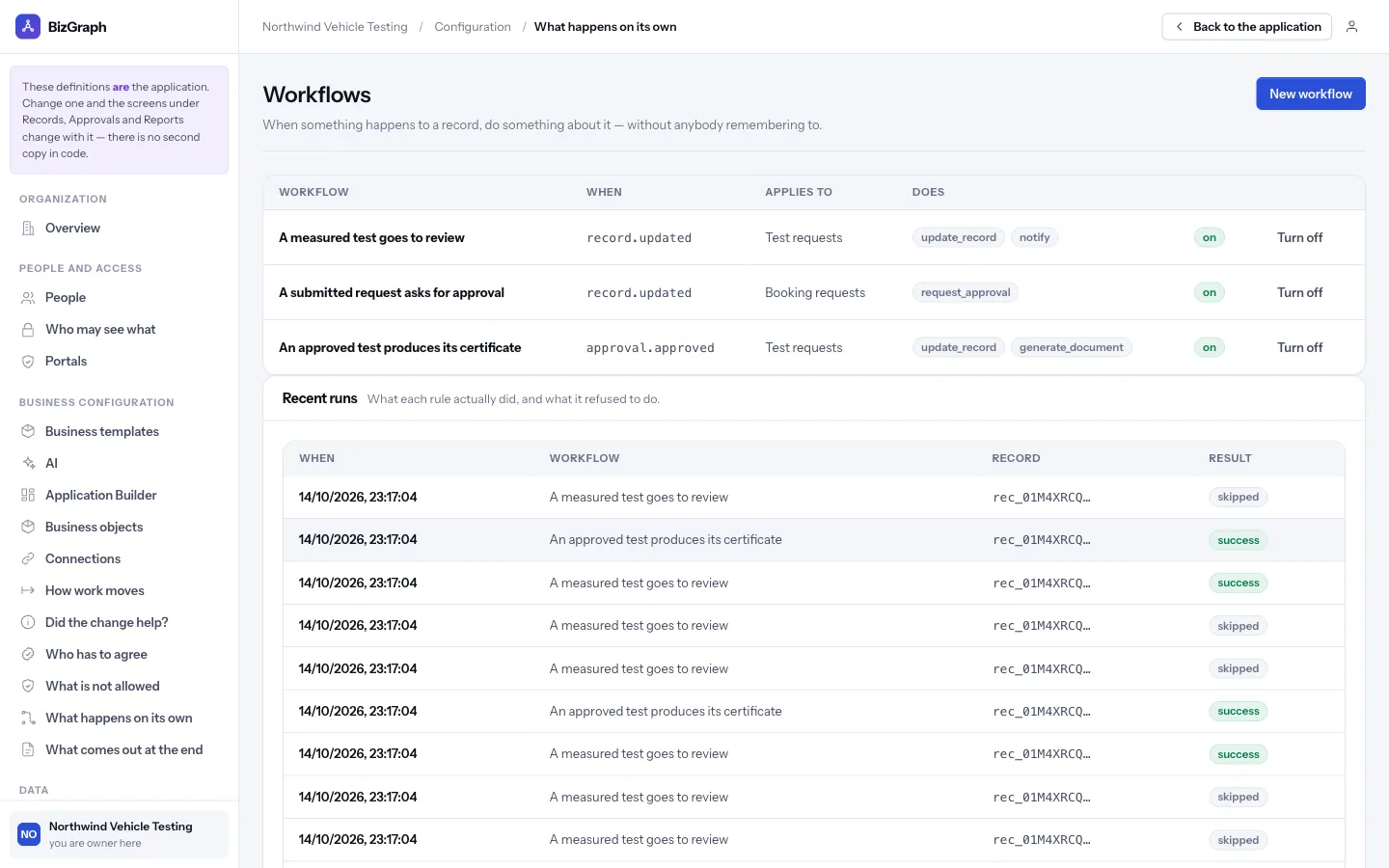
When this happens, if these are true, do that.
Workflows run off ordinary record changes — a record updated, an approval granted — not a manual trigger. Actions come from a closed vocabulary (update a record, notify, generate a document, request an approval), so there is no user code to review. Every run is recorded with its result.
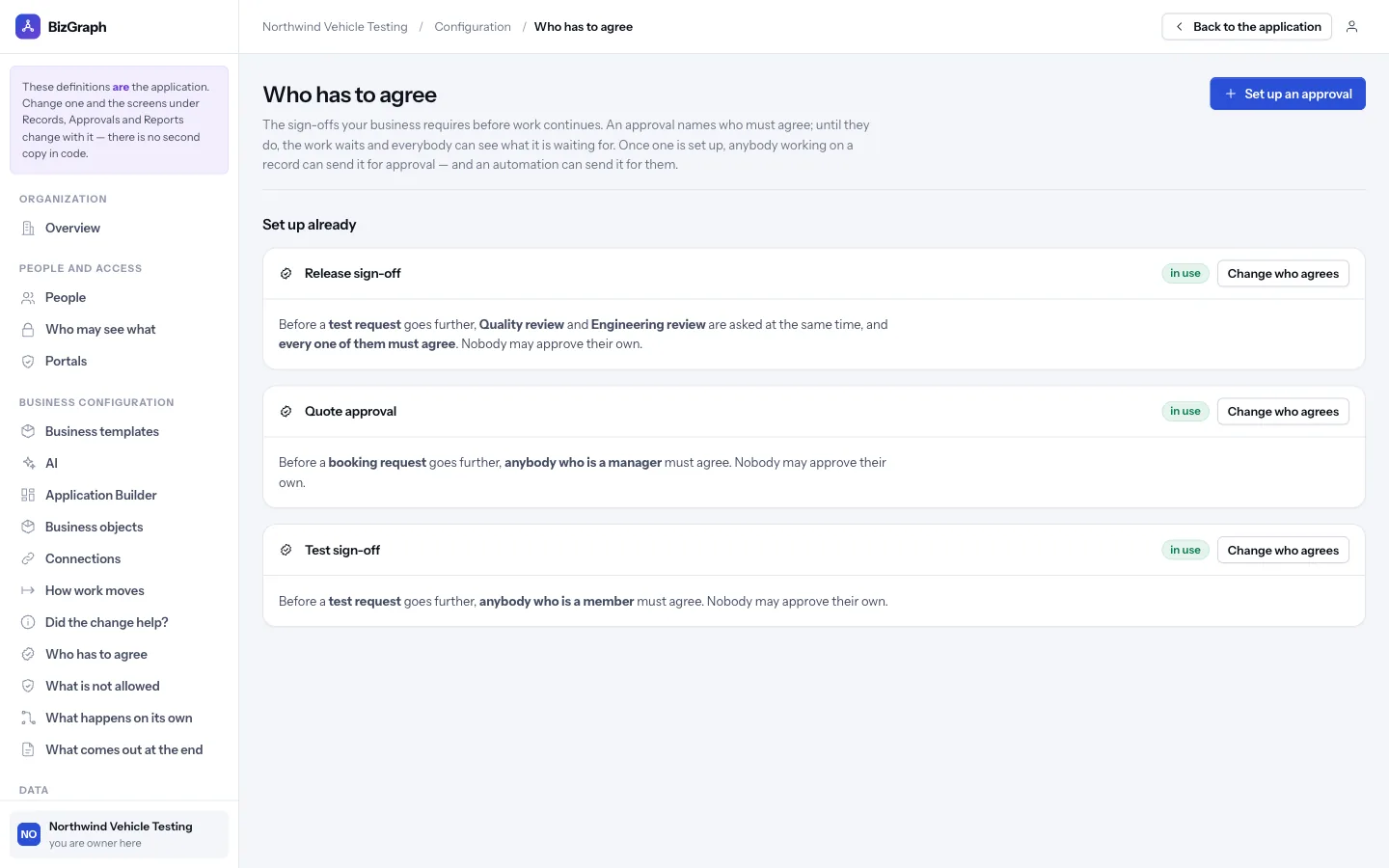
One sign-off, a chain, or several groups at once.
- Approvals attach to a stage move or a workflow step, on any business object
- One approver, steps in order, or groups deciding in parallel
- The approver sees what they are approving — the record and its related measurements
- Every decision lands in the audit trail with who, when and on which version
Rules that calculate, and rules that refuse.
Calculated values
Lookups, aggregations across connections, conditionals and rounding — executed by one deterministic engine.
Validation rules
A rule can refuse a record that is wrong — before it is saved, with a message a person understands.
Changed by proposal
New rules can be proposed in plain language and are simulated against existing records before a person publishes them.
Not built: timers and time-based escalation, case management and process mining. Conditional thresholds work in the engine but cannot yet arrive through the AI path.
See it work on a real workbook, in your browser.
The example operations workbook opens in Tavuni with no account and nothing uploaded. Every number on this site comes from that same pipeline.